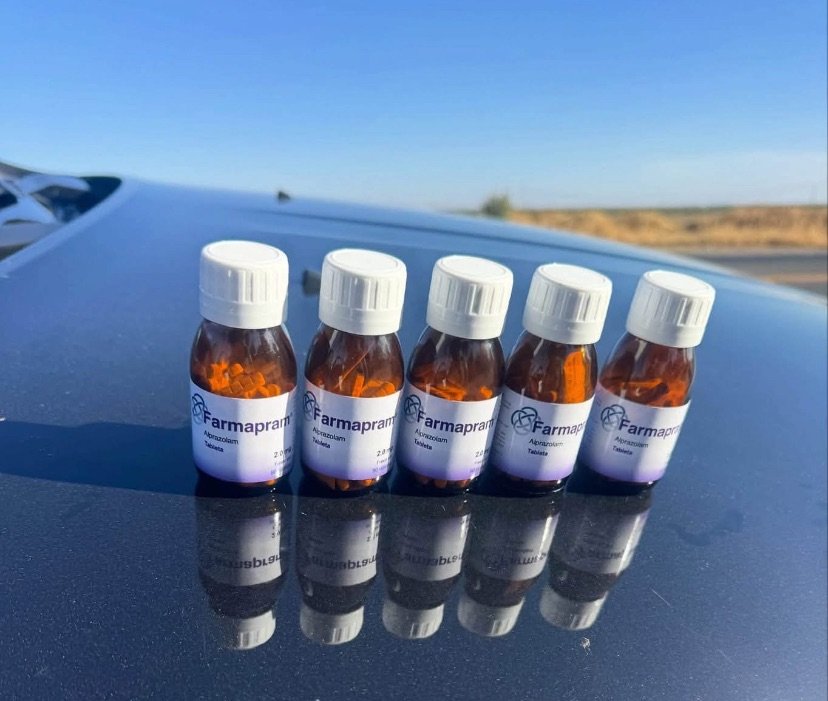
Important Farmapram Safety Information
Farmapram (alprazolam) is effective for anxiety and panic disorders when used as prescribed — but like all benzodiazepines, it carries risks every patient should understand. This page covers side effects, warnings, interactions, dependence risks, and when to seek emergency help.
Farmapram Side Effects
Most alprazolam side effects stem from its calming action on the central nervous system — the same action that relieves anxiety can cause sedation, slowed reflexes, and impaired coordination. They are most likely when starting treatment or after a dose increase, and often lessen as the body adjusts.
Commonly Reported Side Effects
- Drowsiness and sedation — the most frequently reported effect.
- Dizziness or lightheadedness, especially when standing quickly.
- Fatigue, impaired coordination, and difficulty concentrating.
- Memory problems — trouble recalling recent events.
- Dry mouth, appetite or weight changes, constipation, headache.
- Irritability.
Avoid driving or operating machinery until you know how Farmapram affects you, and tell your doctor if common side effects persist — a dose adjustment may help.
Serious Adverse Effects
Seek immediate medical attention if you experience:
- Slowed, shallow, or difficult breathing, especially with extreme drowsiness.
- Severe drowsiness where you cannot be awakened normally.
- Confusion, agitation, or hallucinations.
- Unusual mood or behavior changes, or thoughts of self-harm.
- Seizures.
- Yellowing of the skin or eyes (jaundice).
- Allergic reaction signs: rash, itching, swelling of the face, lips, or tongue, or difficulty breathing.
Respiratory depression — dangerously slowed breathing — is the most serious acute risk of alprazolam.
Medication Interactions
Tell your doctor and pharmacist about everything you take. Key interactions include:
- Opioid pain medications (codeine, oxycodone, morphine) — the combination can cause profound sedation, respiratory depression, coma, and death (FDA boxed warning).
- Other sedatives and sleep aids, including other benzodiazepines and strong antihistamines.
- Ketoconazole, itraconazole, and nefazodone — inhibit the liver enzyme (CYP3A) that breaks down alprazolam, sharply raising drug levels.
- Grapefruit juice — can increase alprazolam blood levels.
- Certain antibiotics and HIV medications.
This is not a complete list — have a pharmacist review your full medication list.
Alcohol and Other Substances
Alcohol intensifies alprazolam’s sedation, impairs coordination and judgment, and greatly increases the risk of dangerous respiratory depression and overdose. Avoid alcohol completely while taking Farmapram. The same danger applies to recreational sedatives and to the combination of alprazolam with opioids — a mix that can be fatal even at prescribed doses.
Dependence and Withdrawal
With regular use — even at prescribed doses — the body can adapt to alprazolam: tolerance may develop, physical dependence can occur, and stopping suddenly can trigger withdrawal. Symptoms may include rebound anxiety and panic, insomnia, restlessness, tremors, sweating, nausea, muscle cramps, and in serious cases, seizures.
Never stop taking Farmapram abruptly. If treatment ends, the dose must be tapered gradually under medical supervision. Using the lowest effective dose for the shortest necessary time — and never increasing the dose yourself — is the most important safety measure.
Important Safety Warnings
- Do not take it if you are allergic to alprazolam/benzodiazepines, have acute narrow-angle glaucoma, or severe breathing problems.
- Use extra caution if elderly, or with liver/kidney disease or a history of substance misuse.
- It can harm an unborn baby and passes into breast milk — discuss risks with your doctor if pregnant or breastfeeding.
- Store securely, out of children’s reach; never share prescription medication.
When to Seek Medical Attention
Call emergency services immediately for suspected overdose (extreme drowsiness, confusion, slowed reflexes, loss of consciousness), severe breathing difficulty, seizures, or serious allergic reaction. Do not wait. Hospitals can administer flumazenil to reverse benzodiazepine effects — professionals only.
Frequently Asked Questions
Q: What are the most common Farmapram side effects?
A: Drowsiness, dizziness, fatigue, impaired coordination, memory problems, and dry mouth are the most commonly reported.
Q: Can Farmapram cause dependence?
A: Yes. Physical dependence can develop with regular use, even at prescribed doses. Never stop suddenly — tapering must be medically supervised.
Q: Is it safe to drink alcohol with Farmapram?
A: No. Alcohol dangerously intensifies sedation and breathing suppression. Avoid it completely.
Q: What should I do if I miss a dose?
A: Take it when you remember, unless it is almost time for the next dose. Never double up. Ask your pharmacist if unsure.
Q: Where can I learn more about Farmapram itself?
A: See Farmapram & Alprazolam for active-ingredient information, Farmapram 2mg for the strength guide, and Farmapram Price & FAQ for pricing questions.
This information is educational only — not medical advice. Farmapram is a prescription medication with serious risks. Always consult your doctor or pharmacist, and seek emergency care for serious side effects or suspected overdose.